How to Reduce External Noise Infiltration: The 2026 Acoustic Guide
In the architectural and psychological landscape of 2026, the home has transitioned from a mere shelter into a primary sanctuary. Yet, as urban density increases and the ubiquity of vehicular and industrial hum grows, our domestic environments are under constant acoustic assault. Noise is not merely a nuisance; it is a physiological stressor that impacts cognitive load, sleep architecture, and long-term cardiovascular health. How to Reduce External Noise Infiltration. To address this, we must view the building envelope not just as a thermal barrier, but as a complex acoustic filter designed to attenuate the chaotic vibrations of the outside world.
The challenge of soundproofing is often underestimated because sound behaves with a fluid-like persistence. It does not simply “bounce” off walls; it finds the microscopic air gaps in window seals, vibrates through structural studs, and resonates within hollow cavities. Consequently, a surface-level approach—such as hanging heavy curtains or adding a single layer of insulation—frequently fails to yield a perceptible decibel reduction. True acoustic remediation requires a multi-disciplinary understanding of physics, material science, and structural engineering.
This investigation provides an exhaustive roadmap for those seeking to reclaim their auditory environment. By analyzing the mechanics of transmission—specifically how sound waves interact with varied substrates—this article serves as a definitive reference for high-performance domestic acoustics. We will move beyond common retail solutions to explore the systemic logic of decoupled assemblies and dissipative mass. For the professional or the sophisticated homeowner, this is an exploration of how to achieve an “acoustic black hole” within a modern residence.
Understanding “how to reduce external noise infiltration”
To investigate how to reduce external noise infiltration, one must first acknowledge the distinction between Sound Transmission Class (STC) and Outdoor-Indoor Transmission Class (OITC). While STC is the industry standard for interior walls, it fails to account for the low-frequency rumble of aircraft engines or heavy trucks. OITC is the more rigorous metric for the building envelope, prioritizing the attenuation of long-wave, low-frequency energy that can penetrate standard masonry and glass.
A common misunderstanding in this field is the “Mass-Only” fallacy. While adding mass (such as thicker drywall or brick) is helpful, mass alone follows the law of diminishing returns. Doubling the mass of a wall only yields approximately a 6-decibel (dB) reduction, a change that is barely perceptible to the human ear. A sophisticated strategy recognizes that air is the primary vehicle for sound. If a window is 99% airtight but has a 1% gap in its weatherstripping, that 1% gap can transmit up to 50% of the external noise energy.
Furthermore, oversimplification risks are inherent in “acoustic marketing.” Many products are sold as “soundproofing” when they are actually “sound absorbing.” Soft foams and panels are designed to reduce echoes inside a room; they do almost nothing to stop sound from entering a room. Knowing how to reduce external noise infiltration requires a focus on the “Acoustic Seal”—ensuring that the building envelope is hermetically isolated from the vibrational energy of the street.
Contextual Background: The Evolution of Urban Soundscapes
Historically, acoustic comfort was a byproduct of traditional construction methods. Pre-war masonry buildings featured thick, multi-wythe brick walls and heavy timber joists that provided significant “Inherent Mass.” Noise was further dampened by the smaller window-to-wall ratios of the nineteenth century. However, as the International Style and subsequent Modernism introduced expansive glass walls and lightweight steel-frame construction, the acoustic integrity of our homes plummeted.
The mid-twentieth century saw the rise of the suburban flight, which introduced a new acoustic predator: the highway. As vehicular traffic increased, residential codes struggled to keep pace with the specific frequency profiles of rubber-on-asphalt. By the 1990s, the “Leaky Condo” crisis highlighted that buildings weren’t just failing to manage water; they were failing to manage the “Acoustic Leak” caused by poorly integrated fenestration and lightweight cladding.
Today, in 2026, we face the “High-Frequency/Low-Frequency Pinch.” We have the high-frequency whine of electric vehicles and drones competing with the low-frequency vibration of heavy infrastructure and HVAC systems. Modern building science has responded with “Dissipative Technology”—using viscoelastic polymers and vacuum-insulated glazing to break the path of sound without requiring 12-inch thick concrete walls.
Conceptual Frameworks and Mental Models
1. The “Acoustic Leak” Mental Model
Think of sound as water. If you were to submerge your house in a giant tank of water, any point where water could enter is a point where sound will enter. This model shifts the focus from “thickness” to “continuity.” The priority becomes the microscopic gaps around electrical outlets, window sills, and door sweeps.
2. The “Mass-Air-Mass” (MAM) Framework
This is the gold standard of acoustic engineering. Instead of one thick wall, you use two thinner walls separated by a large air gap (the “decoupling”). Sound energy hits the first mass, is weakened by the air gap, and is further dampened by the second mass. This framework allows for superior OITC ratings without the structural weight of traditional masonry.
3. The “Flanking Path” Analysis
Sound rarely travels in a straight line. It often enters through the “Flanking Paths”—the floor joists, the attic vents, or the shared plumbing stacks. This model requires the practitioner to look around the problem area. You may soundproof a window perfectly, but if the sound is vibrating through the continuous floorboards under the wall, the noise infiltration persists.
Key Categories of Acoustic Remediation
| Category | Primary Mechanism | Trade-off | Ideal Context |
| Decoupling | Resilient channels / Staggered studs | Loss of interior square footage | New construction or major gut renovation |
| Damping | Viscoelastic glue (Green Glue) | Messy application; high labor | Retrofitting existing drywall layers |
| Mass Addition | Mass Loaded Vinyl (MLV) | High structural weight | Industrial-adjacent homes; engine roar |
| Absorption | Mineral wool (Rockwool) | Doesn’t stop low-freq vibration | Filling stud cavities during re-walling |
| Fenestration | Laminated/Asymmetric Glazing | High unit cost per window | High-traffic urban apartments |
| Sealing | Acoustic caulking / Gasketing | Requires frequent inspection | Every window/door in a residence |
Decision Logic: The “Decibel Gap”
If the goal is to stop the high-pitched squeal of brakes, the logic favors “Asymmetric Glazing” (using two panes of different thicknesses to break sound waves). If the goal is to stop the vibration of a passing subway, the logic must shift to “Mechanical Decoupling” of the floor and walls, as that energy is structural rather than airborne.
Detailed Real-World Scenarios and Decision Logic How to Reduce External Noise Infiltration

Scenario 1: The “Airport Flight Path” Residence
A 1990s wood-frame home located three miles from a major hub.
-
The Constraint: Extreme high-decibel bursts of low-to-mid frequency noise.
-
The Decision: Installation of “Secondary Glazing” (an interior acoustic window) and the addition of a second layer of 5/8″ Type X drywall with a damping compound.
-
Failure Mode to Avoid: Standard triple-pane windows. Often, triple-panes have thin air gaps that can actually resonate at specific frequencies, making them worse for aircraft noise than specialized laminated double-panes.
Scenario 2: The “Corner Bar” Urban Loft
A brick masonry building with large windows facing a nightlife district.
-
The Constraint: High-frequency voices and music; rhythmic bass.
-
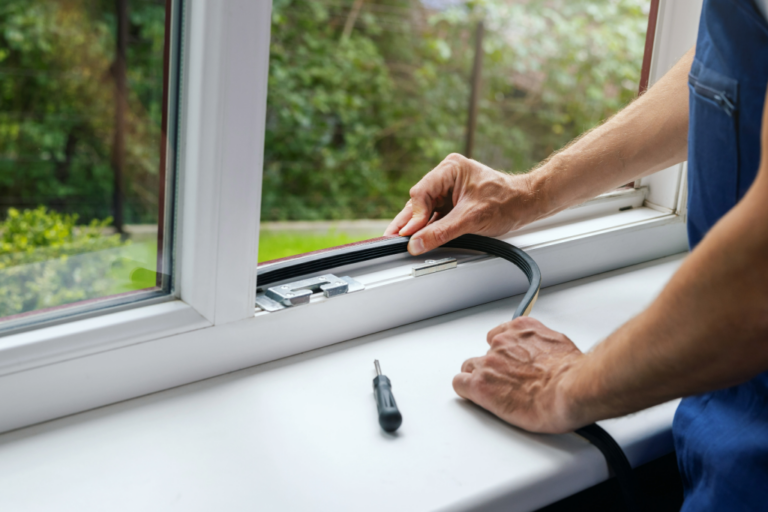
The Decision: Focus on “Acoustic Gasketing.” Replacing standard window seals with heavy-duty EPDM rubber and installing an “Acoustic Storm Door.”
-
Nuance: Because masonry already provides high mass, the “weak link” is almost certainly the air infiltration around the window frames.
Planning, Cost, and Resource Dynamics
Acoustic remediation is a “threshold” investment. If you do 80% of the work, you may only see a 10% result. Success requires crossing the 95% threshold of airtightness.
Range-Based Acoustic Budget (2026 Estimates)
| Intervention | Cost (per room) | Acoustic ROI (dB) |
| Premium Sealing (DIY) | $200 – $500 | 3 – 5 dB |
| Laminated Window Retrofit | $1,500 – $3,500 | 10 – 15 dB |
| Damped Drywall Overlay | $2,000 – $4,500 | 12 – 18 dB |
| Full Decoupled Renovation | $8,000 – $15,000 | 25 – 35 dB |
Opportunity Cost: Choosing a cheaper “standard” window over an “acoustic” window during a renovation represents a massive opportunity cost. Retrofitting an acoustic window later is three times more expensive than the initial upgrade cost during the build phase.
Tools, Strategies, and Support Systems
-
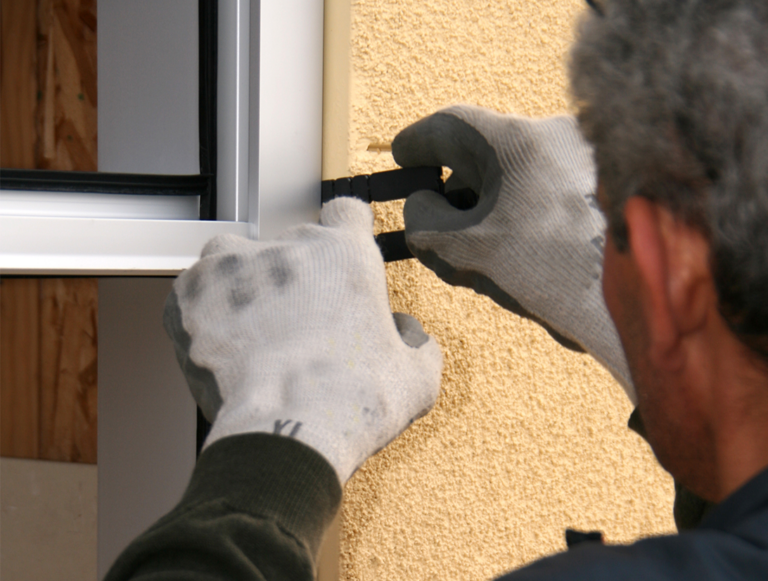
Acoustic Sealant (Non-Hardening): Standard caulk dries and cracks; acoustic caulk stays “rubbery” for decades, maintaining the air seal as the building shifts.
-
Resilient Sound Isolation Clips (RSIC): Mechanical fasteners that “float” the drywall away from the studs, breaking the vibration path.
-
Mass Loaded Vinyl (MLV): A thin, dense “limp mass” membrane that can be draped inside walls to act as an acoustic blanket.
-
Asymmetric IGU (Insulated Glass Units): Specifying a 6mm pane and a 4mm pane in the same window to prevent “sympathetic resonance.”
-
Acoustic Door Bottoms (Automatic): A mechanical sweep that drops down only when the door is closed, creating a true floor seal.
-
Mineral Wool Batts: High-density insulation that absorbs sound energy better than fiberglass but must be used in conjunction with mass.
-
Infrared and Sonic Leak Detectors: Used to find the “holes” in the building envelope where air (and sound) is leaking.
Risk Landscape and Failure Modes
Acoustic failure is binary: either the “envelope” is sealed, or it isn’t.
-
The “Resonance Chamber” Risk: If you create a wall cavity with two layers of drywall but no insulation inside, the cavity acts like a drum, amplifying certain frequencies.
-
The “Short-Circuit” Failure: A single screw that passes through a resilient channel and into a stud “short-circuits” the decoupling. The vibration will travel through that one screw, bypassing the entire soundproofing system.
-
The “Ventilation Paradox”: Homes must breathe. If you seal every gap for sound, you may create an IAQ (Indoor Air Quality) crisis. High-performance soundproofing must be paired with “Acoustic Baffles” for HVAC and ERV (Energy Recovery Ventilator) systems.
Governance, Maintenance, and Long-Term Adaptation
Layered Maintenance Checklist
-
Bi-Annual: Inspect window weatherstripping for “Compression Set.” If the rubber stays flat after the window is opened, it is no longer sealing.
-
Annual: Check for hairline cracks in the perimeter caulk around window and door trim. Sound can enter through a 0.5mm crack.
-
5-Year: For homes near high-vibration areas (railways), inspect the “Resilient Clips” or “Green Glue” joints for signs of structural settling that might have compromised the damping layer.
Adjustment Triggers
If you notice that you can hear the “clicks” of a neighbor’s car locking from inside your bedroom, your seals have failed. This “Acoustic Threshold” should trigger an immediate audit of the gasketing and sealant integrity.
Measurement, Tracking, and Evaluation Metrics
-
Leading Indicator: The “Airtightness Rating” (ACH50). A home that is airtight is almost always acoustically superior.
-
Lagging Indicator: The “OITC Field Test.” Using a high-decibel speaker exterior and a calibrated microphone interior to measure real-world attenuation.
-
Qualitative Signal: The “Interrupted Sleep Log.” Tracking how many times external noise (sirens, barking) triggers a wake-state can quantify the success of the remediation.
-
Documentation Example: Maintain a “Sealant Map” showing every penetration in the building envelope—plumbing, electrical, and gas—that has been treated with acoustic putty.
Common Misconceptions and Industry Corrections
-
Myth: “Triple-pane windows are the best for sound.”
-
Correction: Laminated double-pane windows often outperform triple-panes. The plastic interlayer in laminated glass acts as a damper; triple-panes often have air gaps that are too small to be effective against low-frequency noise.
-
-
Myth: “Egg crates or foam panels stop noise.”
-
Correction: These are for room acoustics (echo). They have almost zero “Transmission Loss” (TL) value. They will not stop the neighbor’s lawnmower.
-
-
Myth: “Plants and hedges are good sound barriers.”
-
Correction: Unless you have 50 feet of dense, solid forest, plants provide only “Psychological Privacy.” Sound waves move right through leaves.
-
-
Myth: “Concrete is the ultimate soundproof material.”
-
Correction: While concrete stops airborne noise (shouting), it is a terrible conductor of impact noise (footsteps or vibration). A concrete floor requires a “floating” top layer to be truly quiet.
-
Ethical, Practical, or Contextual Considerations
In 2026, the “Right to Quiet” is becoming an environmental justice issue. Wealthier neighborhoods often have the resources for high-STC construction, while residents in industrial-adjacent zones suffer from “Noise Pollution” that contributes to chronic stress. From a practical standpoint, soundproofing is also a thermal upgrade. The same measures used to stop sound—airtightness and insulation—dramatically reduce energy consumption. However, we must be careful not to create “Acoustic Isolation” that prevents residents from hearing emergency sirens or smoke alarms, necessitating the integration of “visual” or “smart” alarm systems in ultra-quiet homes.
Conclusion: The Synthesis of Silence and Structure
The pursuit of silence within the home is a journey of precision rather than force. To understand how to reduce external noise infiltration is to accept that sound is a persistent, vibrational guest that requires a “Systemic Lockout.” It is the synthesis of mass, decoupling, damping, and airtightness.
As our cities grow louder, the value of acoustic sanctuary will only increase. By applying the frameworks of the “Acoustic Leak” and “Mass-Air-Mass” assemblies, we do more than just improve a property—we preserve the cognitive and physical health of its inhabitants. Silence is not the absence of sound; it is the presence of an engineered, resilient boundary. In the end, the most successful architectural interventions are the ones you cannot hear.